
Global Atmospheric Environment Under Human-Earth Interactions
Atmospheric environmental change and climate change are two pressing global challenges. A major barrier to solving them is the knowledge gap on atmospheric composition — the abundances, sources, processes, fates and impacts of its constituents. This gap stems from theoretical, methodological and data limitations within individual disciplines, as well as from inadequate integration across related fields. In the ACM group, we are committed to narrowing it through an integrated, multidisciplinary approach.
- We address how human activities lead to globalizing air pollution, climate change and Earth system feedbacks.
- We study sources of air pollutants and greenhouse gases, as well as the transboundary impacts of pollutants through atmospheric transport and economic trade.
- We focus presently on quantifying the levels and emissions of key atmospheric constituents in an FFR manner — Fast in time-to-result, Fine in spatiotemporal resolution, and Reliable in reproducibility and independent validation.
- We use a suite of research tools from various disciplines, including satellite remote sensing, atmospheric modeling, AI for environment, big Earth data, economic and emission statistics, and health modeling.
Research Highlights
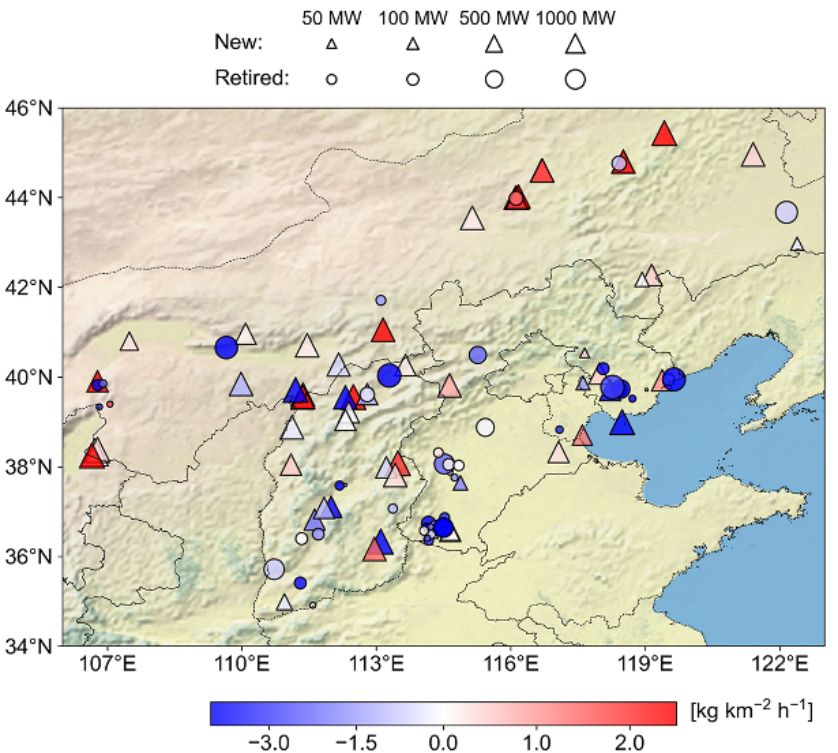
Satellite-detected nitrogen oxides emission changes from power plant dynamics in North China
Pairing a self-compiled power plant database with 0.05° satellite NOx data shows that retired coal-fired units in North China cut summertime NOx emissions substantially, while newly built ultra-low-emission units raised them slightly.
@article{xu2026environmental,
  author  = {Xu, C.-H., Lin, J.-T., Wang, S.-J., Kong, H., Zhang, Y.-H., Yun, Y., Ren, F.-X., Wang, M.-Y., Tan, W.-S., Wang, J.-X., Bai, L., and Gao, J.},
  title   = {Satellite-detected nitrogen oxides emission changes from power plant dynamics in North China},
  journal = {Environmental Research Letters},
  volume  = {21},
  pages   = {154012},
  year    = {2026},
  doi     = {10.1088/1748-9326/ae860b}
}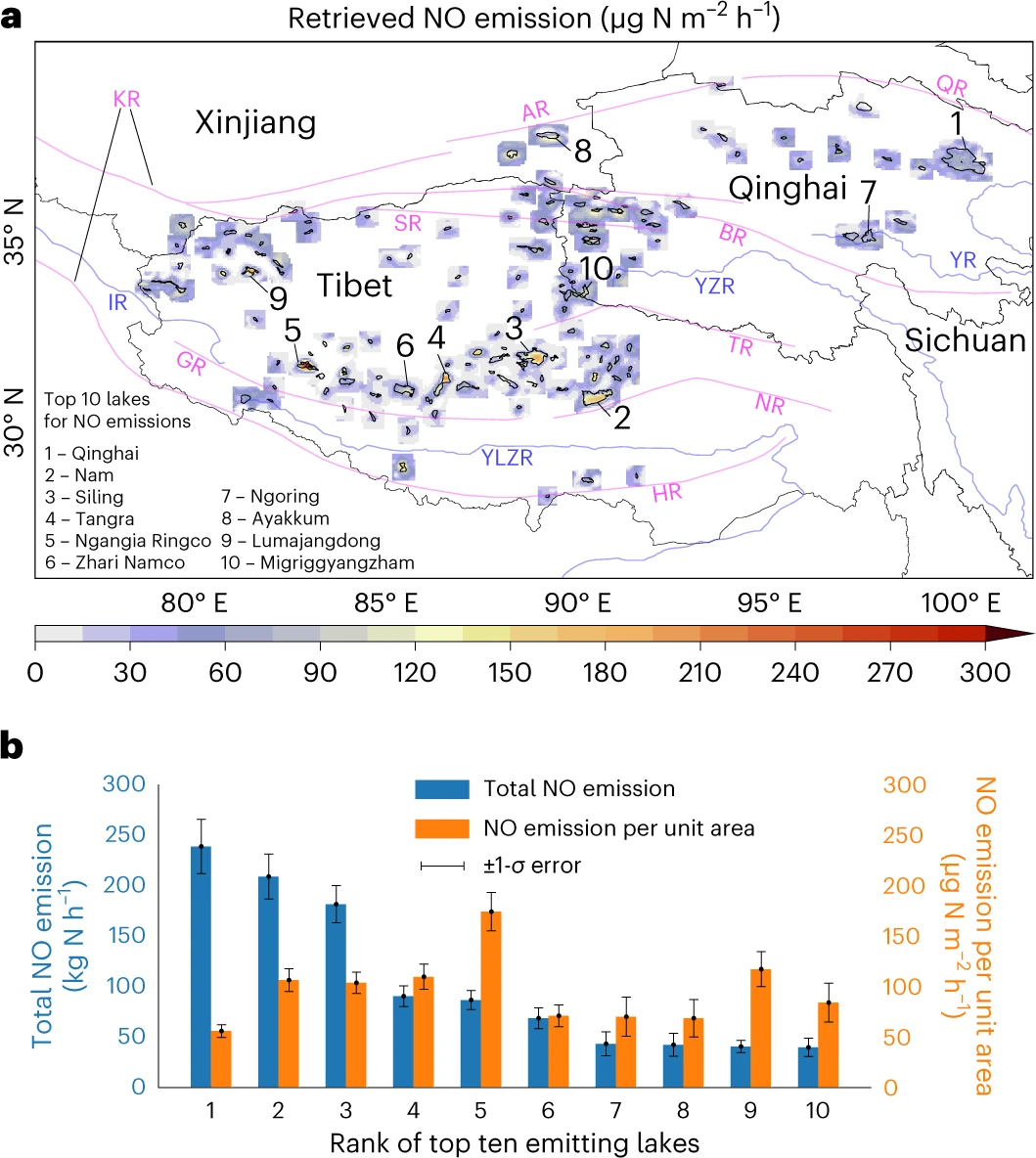
High natural nitric oxide emissions from lakes on Tibetan Plateau under rapid warming
Inversion from satellite NO2 observations reveals unexpectedly large nitric oxide emissions from Tibetan Plateau lakes as the climate warms.
@article{kong2023nature,
  author  = {Kong, H., Lin, J.-T., Zhang, Y.-H., Li, C.-J., Xu, C.-H., Shen, L., Liu, X.J., Yang, K., Su, H., and Xu, W.-Y.},
  title   = {High natural nitric oxide emissions from lakes on Tibetan Plateau under rapid warming},
  journal = {Nature Geoscience},
  volume  = {16},
  pages   = {474–477},
  year    = {2023},
  doi     = {10.1038/s41561-023-01200-8}
}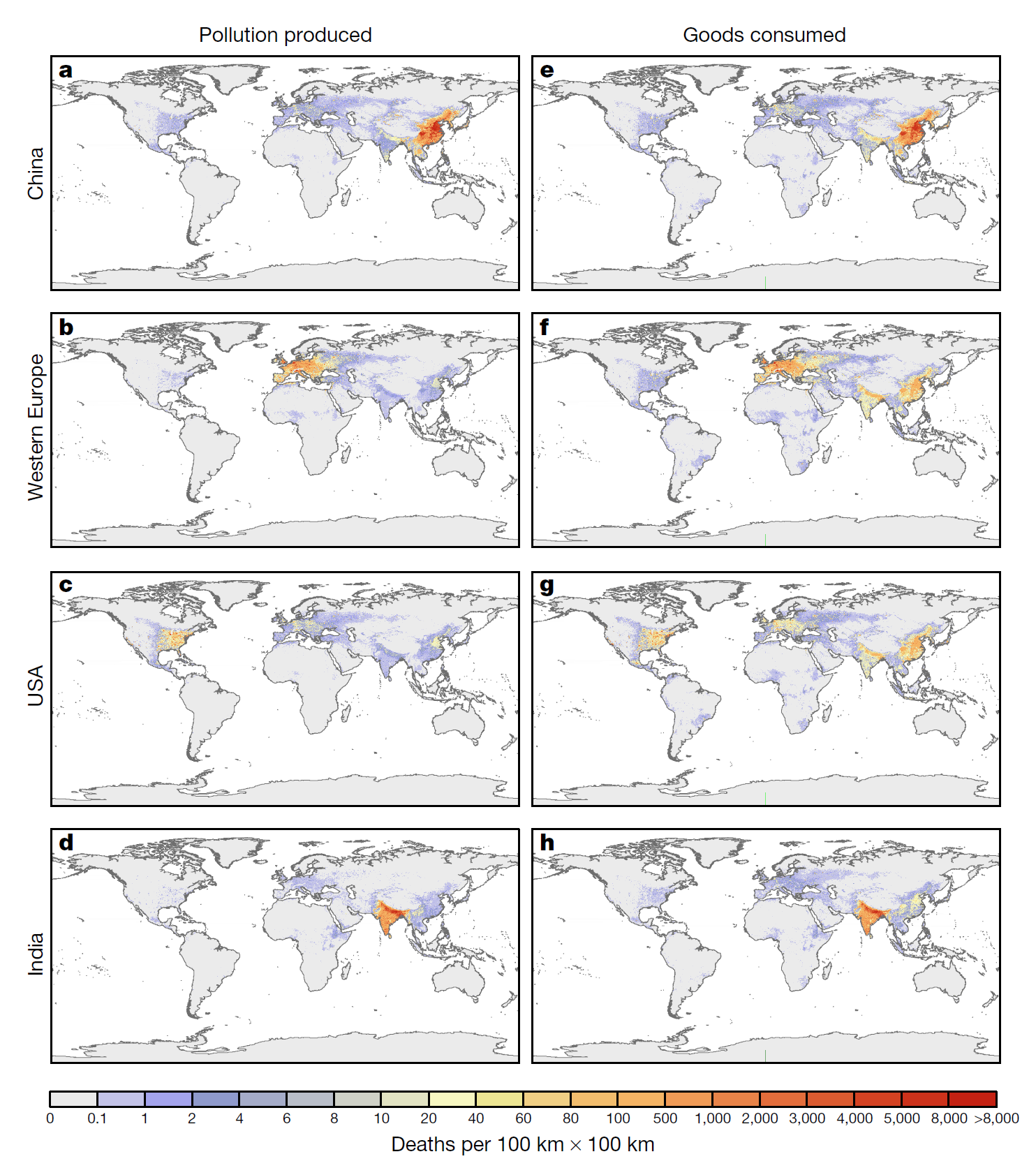
Transboundary health impacts of transported global air pollution and international trade
About 12% of global PM2.5-related premature deaths are caused by pollution emitted outside the country where the death occurs; 22% are linked to goods traded across regions.
@article{zhang2017nature,
  author  = {Zhang, Q., Jiang, X., Tong, D., Davis, S. J., Zhao, H., Geng, G., Feng, T., Zheng, B., Lu, Z., Streets, D. G., Ni, R.-J., Brauer, M., van Donkelaar, A., Martin, R. V., Huo, H., Liu, Z., Pan, D., Kan, H., Yan, Y.-Y., Lin, J.-T., He, K., and Guan, D.},
  title   = {Transboundary health impacts of transported global air pollution and international trade},
  journal = {Nature},
  volume  = {543},
  pages   = {705-709},
  year    = {2017},
  doi     = {10.1038/nature21712}
}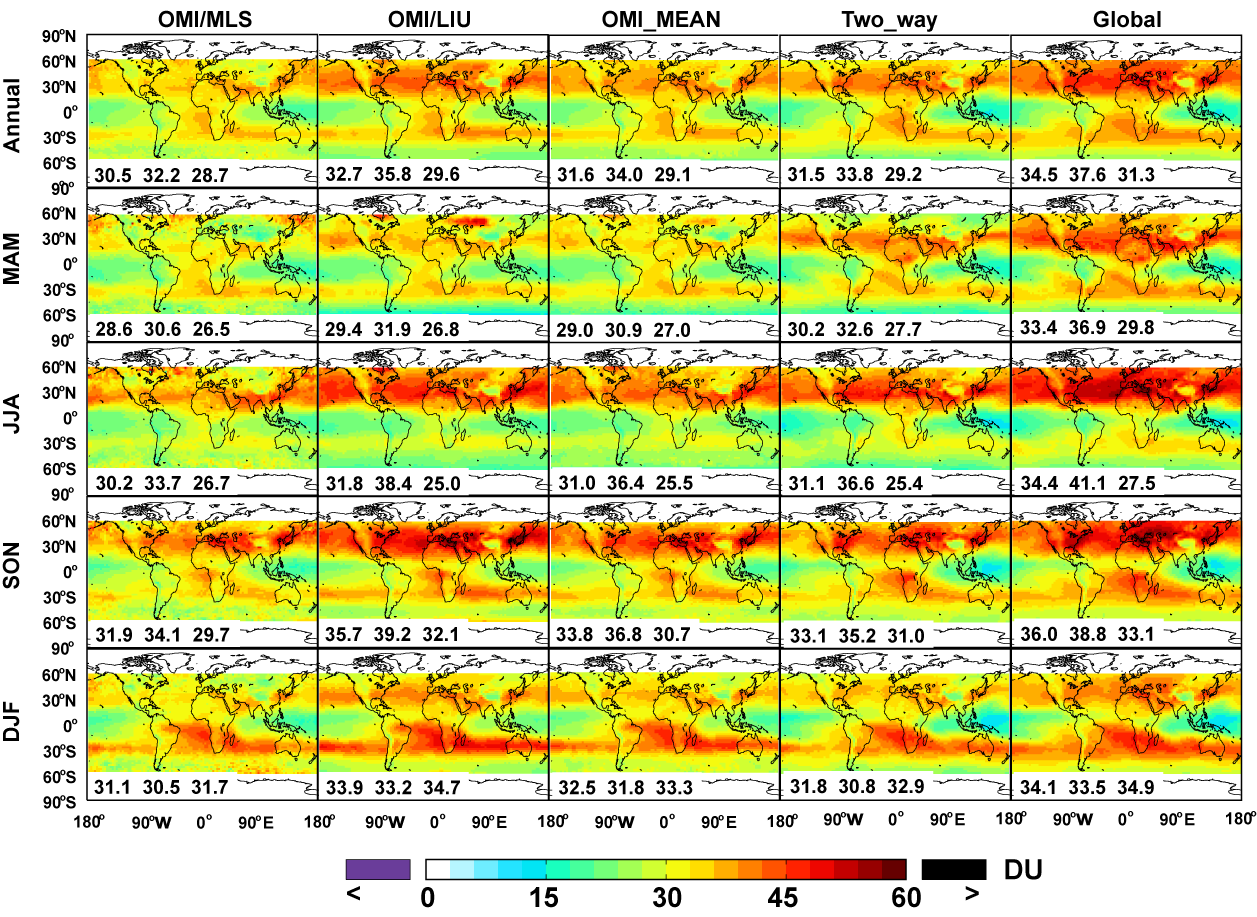
Improved simulation of tropospheric ozone by a global-multi-regional two-way coupling model system
Two-way coupling of GEOS-Chem substantially improves simulated tropospheric ozone and reduces biases in both global and regional distributions.
@article{yan2016atmospheric,
  author  = {Yan, Y.-Y., Lin, J.-T., Chen, J., and Hu, L.},
  title   = {Improved simulation of tropospheric ozone by a global-multi-regional two-way coupling model system},
  journal = {Atmospheric Chemistry and Physics},
  volume  = {16},
  pages   = {2381-2400},
  year    = {2016},
  doi     = {10.5194/acp-16-2381-2016}
}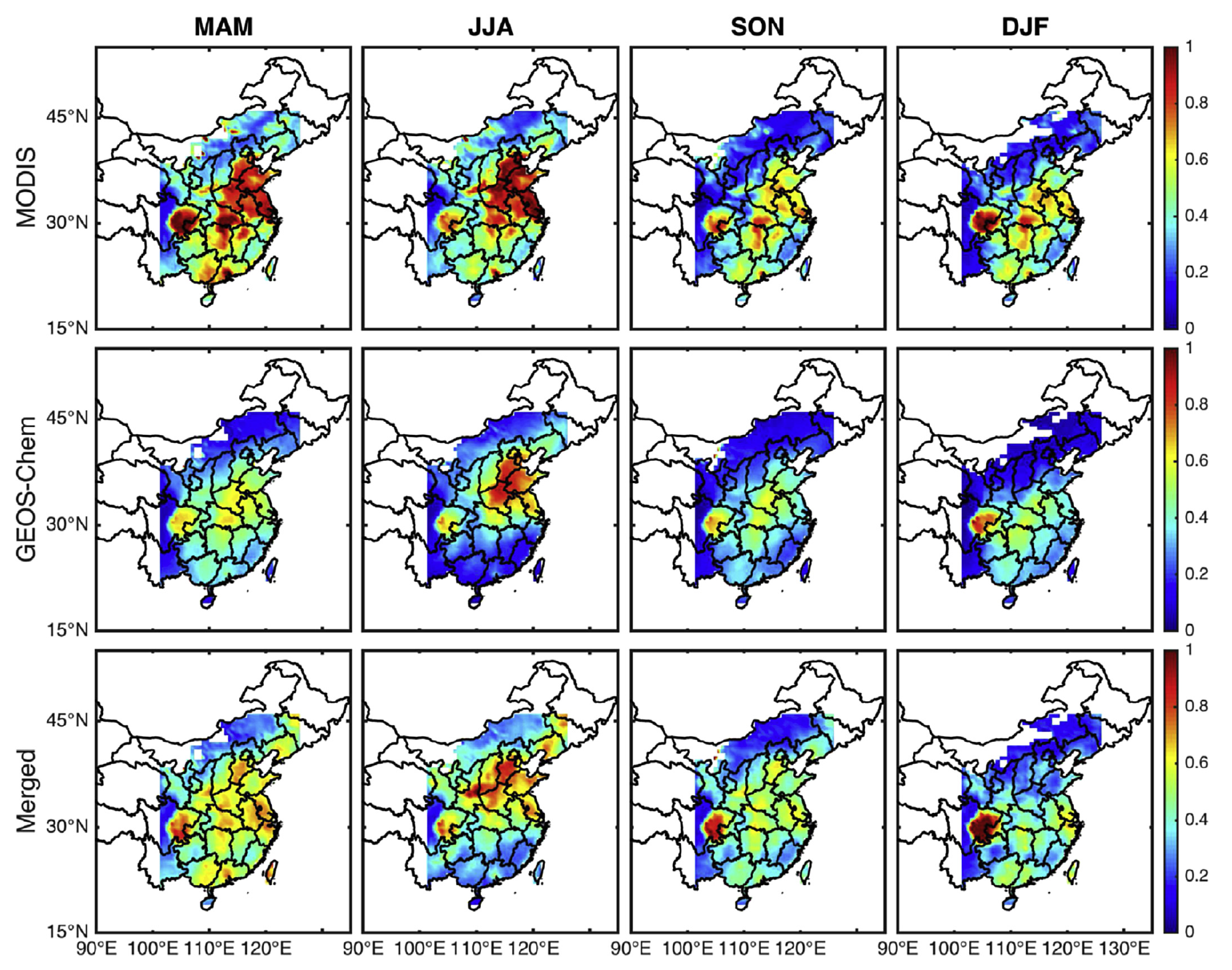
Spatio-temporal variability of aerosols over East China inferred by merged visibility-GEOS-Chem aerosol optical depth
A merged visibility–GEOS-Chem dataset extends aerosol optical depth records over East China for 2005-2012, and captures their spatial, seasonal and interannual variability.
@article{lin2016atmospheric,
  author  = {Lin, J.-T., and Li, J.},
  title   = {Spatio-temporal variability of aerosols over East China inferred by merged visibility-GEOS-Chem aerosol optical depth},
  journal = {Atmospheric Environment},
  volume  = {132},
  pages   = {111-122},
  year    = {2016},
  doi     = {10.1016/j.atmosenv.2016.02.037}
}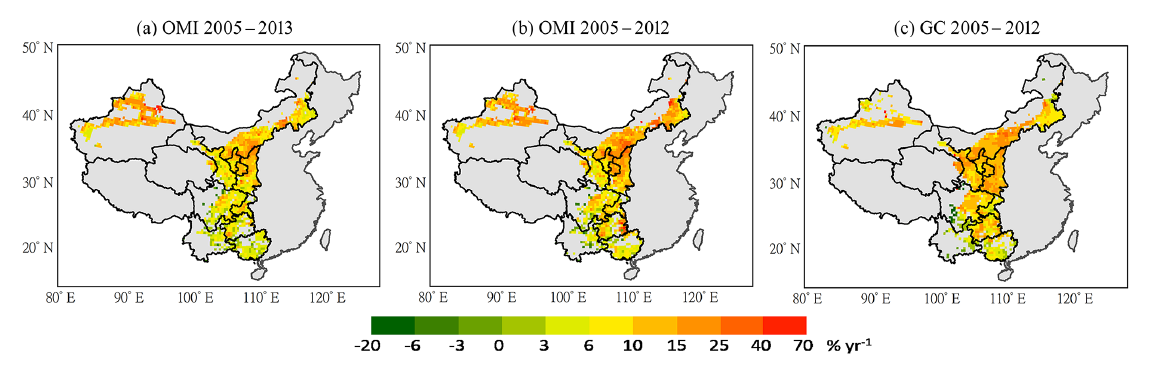
Rapid growth in nitrogen dioxide pollution over Western China, 2005–2013
Satellite records show rapid growth of nitrogen dioxide pollution over western China during 2005–2013, likely related to redistribution of industrial and energy production.
@article{cui2016atmospheric,
  author  = {Cui, Y.-Z., Lin, J.-T., Song, C., Liu, M.-Y., Yan, Y.-Y., Xu, Y., and Huang, B.},
  title   = {Rapid growth in nitrogen dioxide pollution over Western China, 2005–2013},
  journal = {Atmospheric Chemistry and Physics},
  volume  = {16},
  pages   = {6207-6221},
  year    = {2016},
  doi     = {10.5194/acp-16-6207-2016}
}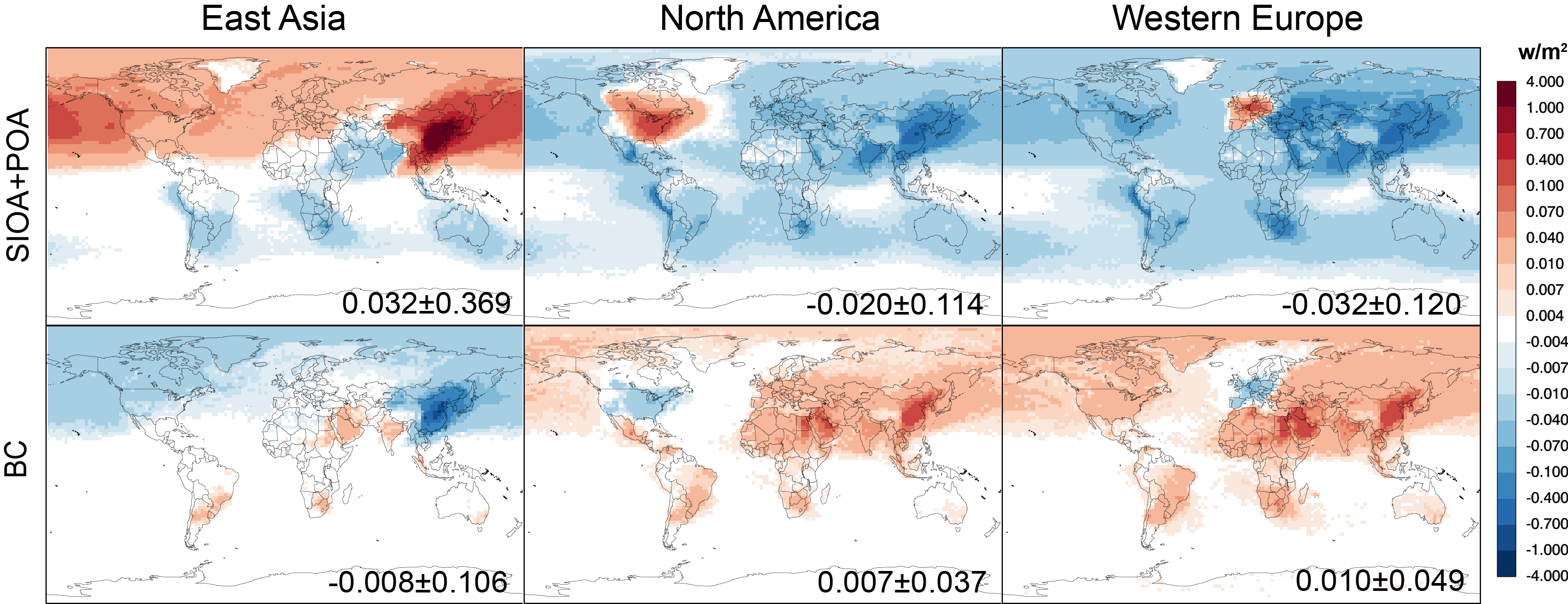
Global climate forcing of aerosols embodied in international trade
Aerosols emitted to produce export goods shift radiative forcing between regions, so international trade redistributes the climate effects of consumption.
@article{lin2016nature,
  author  = {Lin, J.-T., Tong, D., Davis, S., Ni, R.-J., Tan, X., Pan, D., Zhao, H., Lu, Z., Streets, D., Feng, T., Zhang, Q., Yan, Y.-Y., Hu, Y., Li, J., Liu, Z., Jiang, X., Geng, G., He, K., Huang, Y., and Guan, D.},
  title   = {Global climate forcing of aerosols embodied in international trade},
  journal = {Nature Geoscience},
  volume  = {9},
  pages   = {790-794},
  year    = {2016},
  doi     = {10.1038/NGEO2798}
}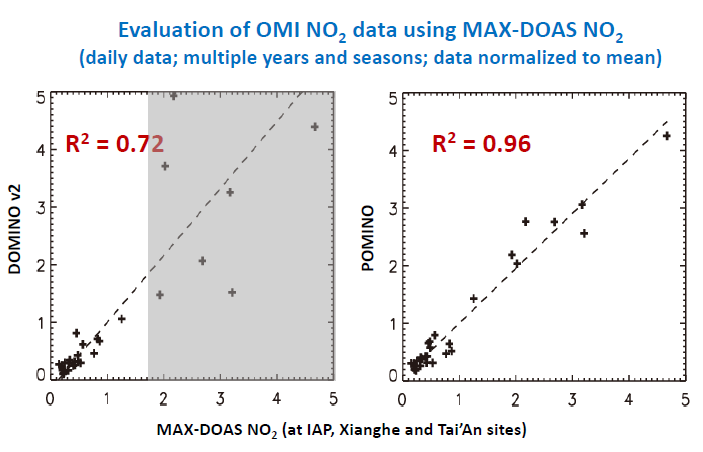
Influence of aerosols and surface reflectance on satellite NO2 retrieval: seasonal and spatial characteristics and implications for NOx emission constraints
Explicitly treating aerosols and surface reflectance anisotropy improves OMI NO2 retrievals over East Asia, including both data coverage and accuracy.
@article{lin2015atmospheric,
  author  = {Lin, J.-T., Liu, M.-Y., Xin, J.-Y., Boersma, K. F., Spurr, R., Martin, R., and Zhang, Q.},
  title   = {Influence of aerosols and surface reflectance on satellite NO2 retrieval: seasonal and spatial characteristics and implications for NOx emission constraints},
  journal = {Atmospheric Chemistry and Physics},
  volume  = {15},
  pages   = {11217-11241},
  year    = {2015},
  doi     = {10.5194/acp-15-11217-2015}
}
China’s international trade and air pollution in the United States
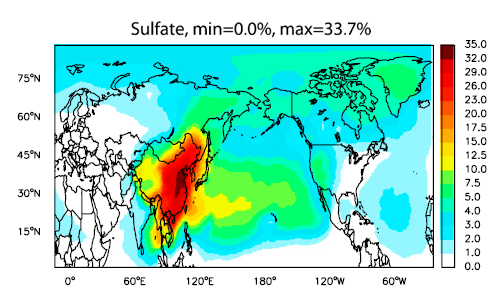
In 2006, up to 36% of China's pollutant emissions came from producing exports, and part of that pollution reached the United States.
@article{lin2014proceedings,
  author  = {Lin, J.-T., Pan, D., Davis, S. J., Zhang, Q., He, K., Wang, C., Streets, D. G., Wuebbles, D. J., and Guan, D.},
  title   = {China’s international trade and air pollution in the United States},
  journal = {Proceedings of the National Academy of Sciences of the United States of America},
  volume  = {111},
  pages   = {1736-1741},
  year    = {2014},
  doi     = {10.1073/pnas.1312860111}
}
Tropospheric carbon monoxide over the Pacific during HIPPO: Two-way coupled simulation of GEOS-Chem and its multiple nested models
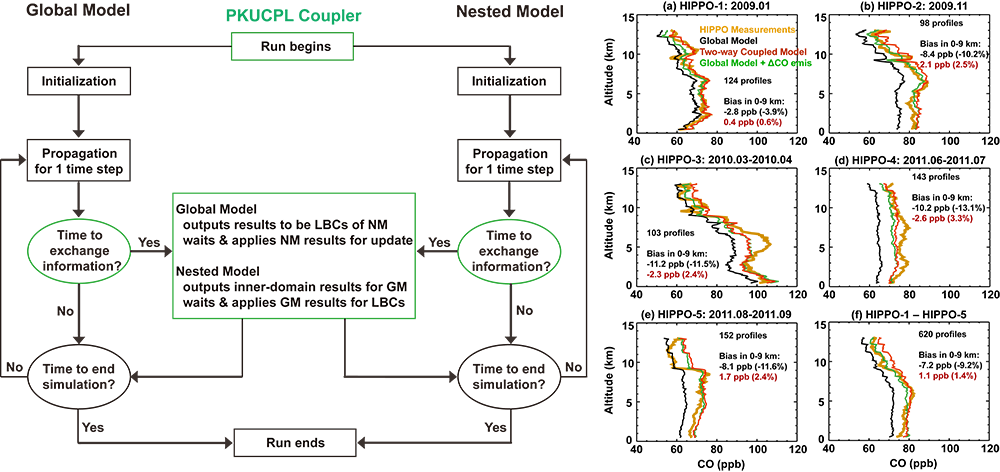
Two-way coupling of GEOS-Chem with its nested models reproduces HIPPO aircraft CO profiles over the Pacific more accurately than the global model alone.
@article{yan2014atmospheric,
  author  = {Yan, Y.-Y., Lin, J.-T., Kuang, Y., Yang, D.-W., and Zhang, L.},
  title   = {Tropospheric carbon monoxide over the Pacific during HIPPO: Two-way coupled simulation of GEOS-Chem and its multiple nested models},
  journal = {Atmospheric Chemistry and Physics},
  volume  = {14},
  pages   = {12649-12663},
  year    = {2014},
  doi     = {10.5194/acp-14-12649-2014}
}